Odoo

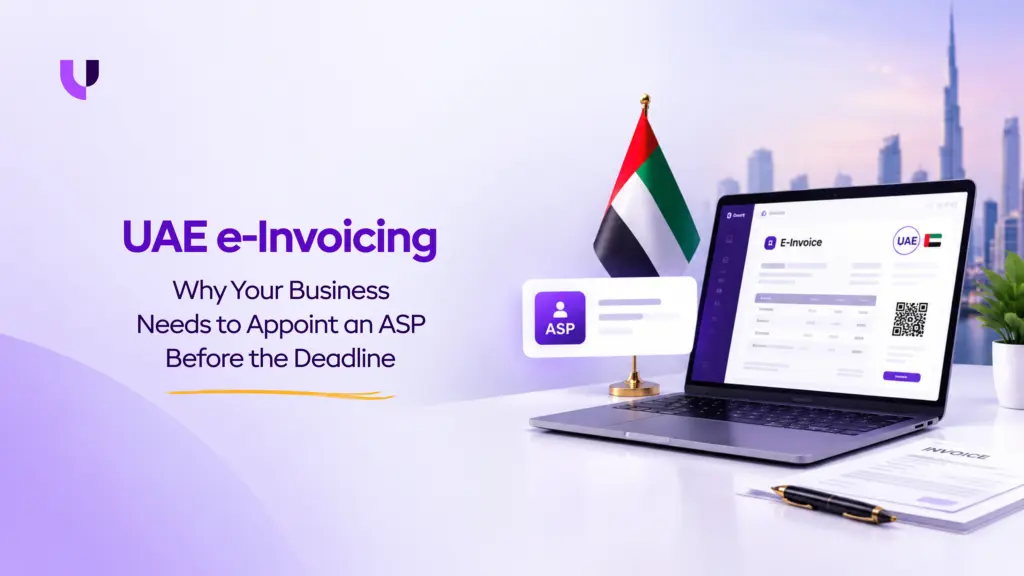
UAE e-Invoicing: Why Your Business Needs to Appoint an ASP Before the Deadline

Read by: 3

Reading Time 5 Min Read

Published on October 29th 2026

UAE e-Invoicing: Why Your Business Needs to Appoint an ASP Before the Deadline
Quick Summary

Introduction

The UAE is moving to mandatory e-Invoicing, and the first appointment deadline is days away. Large businesses must appoint an Accredited Service Provider (ASP) by 30 October 2026, with everyone else following by 31 March 2027.

E-Invoicing is the next step in the UAE's digital tax transformation. Instead of emailing PDFs or printing invoices, businesses will exchange structured electronic invoices through accredited providers, with invoice data reported to the tax authority.

For most companies, this is not just a finance change. Your ERP or accounting system has to produce invoices in the required format, connect to an ASP, and handle the full flow of sending, receiving and tracking documents. The sooner you start, the smoother that transition will be.

What is an ASP?

An ASP, or Accredited Service Provider, is a company approved to exchange e-invoices on your behalf under the UAE e-Invoicing framework.

Think of the ASP as the secure bridge between your business and the wider e-Invoicing network. Your ERP creates the invoice; the ASP validates it, converts it into the required structured format where needed, delivers it to your customer's ASP, and passes the required data to the UAE e-Invoicing system.

The same applies in reverse. When a supplier sends you an e-invoice, it arrives through your ASP and flows into your ERP for processing. Without an appointed ASP, your business cannot send or receive compliant e-invoices once the mandate applies to you.

Key UAE e-Invoicing deadlines

Your deadlines depend on annual revenue. As of 28 October 2026, the official timelines are:

Annual revenue Appoint an ASP by Go live by
AED 50 million or more 30 October 2026 1 January 2027
Below AED 50 million 31 March 2027 1 July 2027

In both cases, there are only two to three months between appointing an ASP and going live. That window has to cover integration, testing and team training.

Why is appointing an ASP important?

Appointing an ASP is the step that makes everything else possible. Here is what the right provider brings:

  • Regulatory compliance: Meet the applicable UAE e-Invoicing requirements and deadlines with a provider approved to operate within the framework.
  • Seamless ERP integration: Connect your existing ERP, such as Odoo, directly to the e-Invoicing network, so invoices flow out of the system your team already uses.
  • Automated invoicing: Cut manual work and repetitive data entry. Invoices are generated, validated and sent without re-keying.
  • Accurate data exchange: Help ensure every invoice is transmitted in the required format, with validation catching errors before they reach your customer or the authority.
  • Operational efficiency: Keep sales, purchase and accounting processes running with minimal disruption as the new rules come into force.

Why should businesses start early?

E-Invoicing projects rarely fail on the technology. They stall on time: vendor selection, data clean-up and testing all take longer than expected. Starting early gives you room to:

  • Evaluate and appoint the right ASP instead of signing with whoever is available at the last minute.
  • Complete ERP integration and testing so invoices are proven to work before they have to.
  • Identify data and system gaps such as missing customer TRNs, incomplete product data or custom invoice layouts that need adjusting.
  • Avoid last-minute pressure on finance and IT teams, who will also be handling year-end and regular VAT work.

For businesses below AED 50 million in revenue, 31 March 2027 may feel distant. In practice, starting the evaluation now leaves comfortable time for a well-tested go-live.

Want to start a project with us?

Empowering businesses to achieve greatness through strategic guidance and innovative solutions.

Book A Demo

How to choose the right ASP

Not every provider will suit every business. Use these four checks to shortlist:

  • Verify accreditation: Confirm the provider appears on the official list of accredited service providers published by the UAE authorities. Do not rely on marketing claims alone.
  • Check ERP compatibility: Ask whether the provider already integrates with your ERP or accounting software, and whether that integration is a ready connector or a custom build.
  • Compare the full cost: Look beyond headline pricing. Compare per-invoice charges, annual subscription fees, onboarding fees and integration costs against your expected invoice volumes.
  • Evaluate support: security and scalability. Check local support hours, data security and hosting practices, uptime commitments, and whether the platform can grow with your transaction volumes and group entities.

Example: Odoo ERP users

For Odoo users, the goal is simple: keep invoicing in Odoo, and let the ASP handle the exchange. A typical flow looks like this:

  • Your team confirms a customer invoice in Odoo as usual.
  • Odoo sends the invoice data to the ASP through an API connector.
  • The ASP validates the invoice, converts it to the required structured format and delivers it to the buyer's ASP.
  • The required data is reported to the UAE e-Invoicing system.
  • The status (accepted, rejected or delivered) is sent back and recorded against the invoice in Odoo.

Incoming supplier e-invoices follow the reverse path and can land in Odoo as draft vendor bills, ready for review.

Test before you go live. Before the mandatory date, run real scenarios through a test environment: standard invoices, credit notes, multi-currency invoices, zero-rated and exempt supplies, and rejected invoices. Check that taxpayer details, VAT treatment and invoice numbering are correct. Problems found in testing cost hours; problems found after go-live can hold up billing and cash flow.

Conclusion: appoint your ASP in time

UAE e-Invoicing is coming in two waves, and both start with appointing an ASP. Businesses with revenue of AED 50 million or more need to act now. Everyone else should start evaluating providers well ahead of 31 March 2027.

The businesses that go live smoothly will be the ones that review their requirements early, choose an ASP that fits their ERP, and test thoroughly before the deadline.

Need help getting ready? Uncanny Consulting Services is an Odoo Certified Silver Partner working with businesses across the UAE and GCC. We can help you assess your e-Invoicing readiness, shortlist and appoint the right ASP, and integrate and test it with your Odoo setup. Get in touch with our team to start your e-Invoicing plan today.

Found this post helpful? Be sure to share it with your network!

Social iconSocial iconSocial iconSocial iconSocial iconSocial iconSocial icon
Kalpesh Gajera Profile

About Author

Kalpesh Gajera

Kalpesh Gajera is the Chief Technology Officer at UNCANNY Consulting Services, specializing in Odoo, ERP, and eCommerce technologies. He focuses on building scalable enterprise solutions that help organizations streamline operations, improve efficiency, and accelerate digital transformation initiatives.

Related Blogs

Odoo 20 Light Users vs. Full Users: Pricing, Access Rights, and Licensing
October 22, 2026
Odoo 20 Light Users vs. Full Users: Pricing, Access Rights, and Licensing The important part is working out who needs what before assigning licences. Let's start with the difference between Light and full users.

Author: Kalpesh Gajera

UAE E-Invoicing: Accredited Service Provider (ASP) Selection, Costs and ERP Integration
October 21, 2026
UAE E-Invoicing: Accredited Service Provider (ASP) Selection, Costs and ERP Integration Once the steps are followed, your client’s e-invoicing ASP then performs its own check upon receipt and submits the invoice to the FTA separately. The FTA then cross-checks the two submitted documents.

Author: Kamlesh Devaliya

The Best Odoo Alternative for Replacing Asana, Notion, and QuickBooks
September 8, 2026
The Best Odoo Alternative for Replacing Asana, Notion, and QuickBooks Odoo takes a different approach. Its accounting, project management, knowledge, sales, inventory, and other business applications are designed to work from the same platform.

Author: Kalpesh Gajera

Want to Take Your Business to The Next Level? We are Just a Phone Call Away!

Empowering businesses to achieve greatness through strategic guidance and innovative solutions.

Contact Us