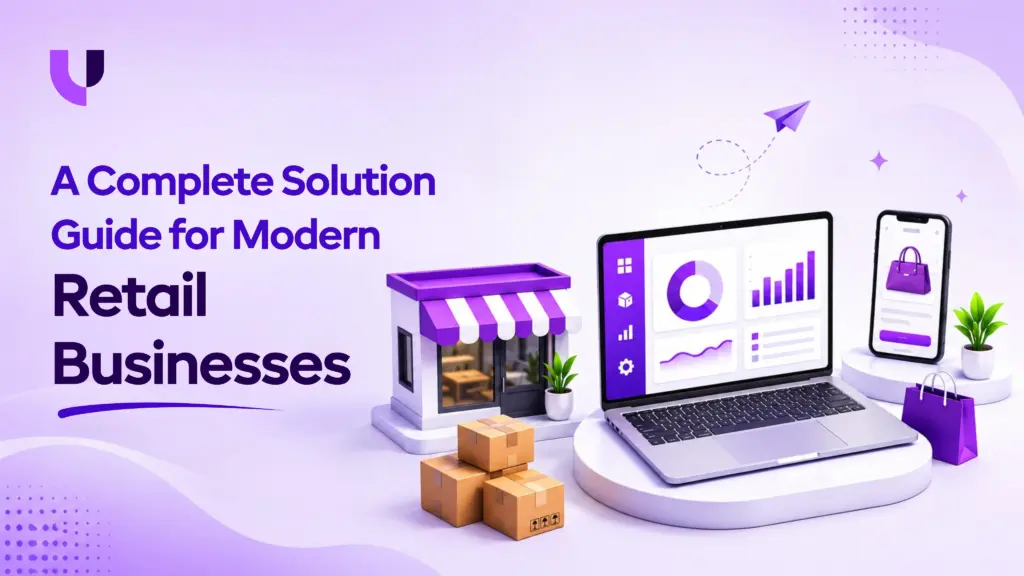
Retail ERP: A Complete Solution Guide for Modern Retail Businesses

Sanjay Gohel
HOD Odoo
Sanjay Gohel is the Head of Department – Odoo at UNCANNY Consulting Services, specializing in ERP implementation, Odoo development, and software solutions. He helps businesses improve efficiency through customized ERP systems designed to streamline workflows and support operational excellence.

 14 Min Read
Published on May 28th 2026
Introduction
Managing supply chain disruptions and inventory imbalances remains the #1 pain point for retail businesses in 2026.
Retail businesses today manage inventory, stores, warehouses, online orders, and customer operations simultaneously, making coordination across separate systems difficult. Retail ERP platforms are built to bring these operations together into one environment.
Despite the latest tech and tools, many retailers continue to work with disconnected systems, losing nearly 3-7% of their margins. While the numbers may look small, they’re enough to disrupt operations at scale.
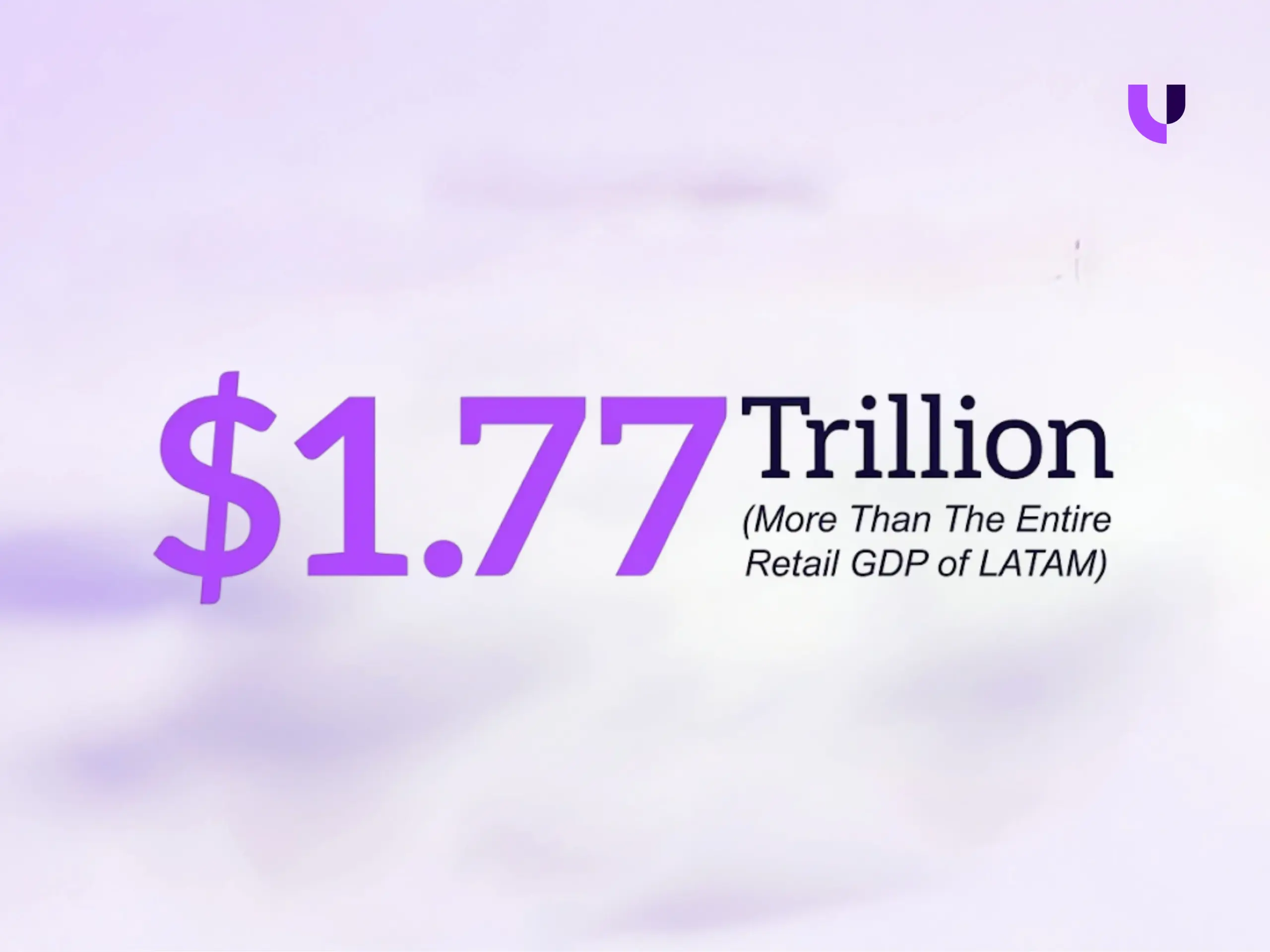
According to IHL Group research, inventory distortion (including overstocks and stockouts) costs the global retail industry over $1.73 trillion annually. Reports also suggest that out-of-stock products alone account for hundreds of billions in lost retail sales every year.
This is where ERP for retail industry becomes critical for modern operations.
Instead of managing inventory, procurement, sales, and warehousing as separate units, the ERP platform brings them together into a single, connected platform. This creates an ecosystem that centralizes your retail operations.
What Is a Retail ERP? (Operational Overview)
A retail ERP is a platform that allows you to run your retail operations from a single connected system. It replaces multiple disconnected tools with a clean, intuitive dashboard that gives you insights into inventory, sales, purchases, stores, and finance. An ERP helps retail teams maximize efficiency by leveraging the same operational data.
Wonder why one version of the data matters?
Having connected retail systems matters because as businesses scale across stores, warehouses, and other platforms, operations become challenging. Teams manage inventory in one system, sales in another, and reporting moves to a different platform entirely. Over time, disconnected systems become blind spots for retail operations.
Retail ERP solutions typically manage:
- Inventory and stock movement
- Point-of-sale (POS) operations
- Multi-store retail workflows
- Warehouse and fulfillment processes
- Procurement and supplier management
- eCommerce and marketplace integrations
- Financial reporting and accounting
- Customer and order operations
For example, if the product is sold from a physical outlet, the omni-channel ERP will record the transaction, update inventory, and adjust stock visibility across warehouses.
Retail ERP vs Traditional ERP Systems: Comparison Table
Traditional ERPs were designed to manage a wide range of operations across the retail sector. While they support retail operations to some extent, traditional models lack flexibility, real-time updates, and inventory visibility for users.
On the contrary, modern ERP system for retail business are designed specifically around modern operations. They handle everything from retail operations to omnichannel sales and warehouse coordination. These systems are structured differently and help businesses get ready to scale.
Comparison Table: Retail ERP vs Traditional ERP Systems
| Area | Generic ERP Systems | Odoo |
|---|---|---|
| SKU & Variant Handling | Often managed through naming conventions or custom fields, which becomes hard to scale. | Structured using attributes and variants, making identification clear across operations. |
| Inventory Updates | Can involve delays or disconnected modules | Real-time updates across all inventory movements |
| Warehouse Execution | Relies heavily on manual checks and operator accuracy | Barcode-based validation ensures correct picking and movement |
| System Flexibility | Requires customization to fit workflows | Modular and configurable to match real operations |
| Data Consistency Across Teams | Different teams may work on separate data sets | Single system with shared, real-time data across teams |
The most significant difference between traditional and modern retail ERPs is the level of inventory visibility.
In traditional ERP environments, inventory often moves through broader enterprise workflows. Retail ERP systems, on the other hand, are designed for faster operational cycles, where stock availability, fulfillment speed, and real-time coordination directly affect the customer experience.
Benefits of Implementing a Retail ERP System
Retail operations become more complex as brands scale across inventory, outlets, and fulfillment networks. Instead of managing the moving parts of your retail operations separately, businesses run them with a single, connected system.
Here’s a closer look at the benefits of an ERP system for your retail operations:
Improved Inventory Visibility
One of the biggest challenges in retail operations is inventory accuracy. According to ECR Loss reports, many retailers have inventory records that are over 60% inaccurate. This further results in overstocks, stockouts, and misplaced inventory, ultimately causing losses for business owners.
Retail ERP systems provide better visibility of inventory with real-time updates across your distribution channel, from warehouses to online stores. This enables retailers to better track inventory and to minimize operational blind spots.
Faster Multi-Channel Coordination
Modern retailers rarely operate through a single sales channel anymore. Orders move through retail stores, websites, marketplaces, and fulfillment centers simultaneously.
An ERP system in supply chain management synchronizes these operations by integrating inventory, order management, POS systems, and warehouse workflows into a single operational environment. This reduces delays between channels and improves fulfillment coordination.
Better Operational Decision-Making
Retail businesses generate operational data continuously, but disconnected systems often make reporting unreliable or delayed.
Retail ERP systems centralize operational reporting, allowing businesses to track:
- Sales performance
- Inventory movement
- Supplier operations
- Warehouse efficiency
- Procurement trends
When every aspect of retail is managed through one reporting structure, it improves decision-making speed across operations.
Reduced Manual Coordination
As retail operations scale, teams often spend more time coordinating between systems than actually managing operations.
Retail ERP systems reduce manual coordination by automating operational workflows such as:
- Inventory updates
- Replenishment triggers
- Procurement workflows
- Financial reconciliation
- Order synchronization
This helps teams spend less time manually resolving operational gaps.
Easier Retail Scalability
Operational complexity increases significantly when retailers expand into:
- New stores
- Warehouse locations
- Online marketplaces
- Regional fulfillment operations
Retail ERP systems create a scalable operational structure in which expansion does not require rebuilding workflows from scratch.
This becomes especially important for retailers managing multi-location inventory and omnichannel retail operations simultaneously.
Want to start a project with us?
Empowering businesses to achieve greatness through strategic guidance and innovative solutions.
Book A Demo
Common ERP System Implementation Challenges
While retail ERP systems solve major operational bottlenecks, implementing them in your workflow is rarely a deployment. Most businesses face challenges at this stage, and this section examines them in more detail.
Here’s a closer look at the common challenges during retail ERP implementation:
Inventory and Product Data Issues
One of the most common implementation problems starts with the inventory data itself. Retail businesses often have:
- Duplicate SKUs
- Inconsistent product naming
- Missing variant structures
- Inaccurate stock records
When this data is entered into the ERP without cleaning, operational issues are carried over to the new system. This is especially common in retail operations with large catalogs serving many different stores or warehouses.
Resistance to Operational Change
ERP implementation changes how teams work daily. Inventory updates, procurement approvals, warehouse movements, reporting, and POS workflows are more structured within the system.
This usually creates resistance early on, especially when teams are used to manual processes or independent workflows.
In many implementations, the challenge is less about software adoption than about behavioral change in operations.
Multi-Channel Integration Complexity
Modern retailers often operate through:
- Physical stores
- Third-party logistics systems
- eCommerce websites
- Marketplaces
Connecting multiple workflows to a single ERP might seem like a smart move, but it can quickly become challenging if your workflows are not standardized. Working with disconnected workflows could lead to further synchronization delays, broken workflows, and inconsistent reporting.
Lack of Process Alignment Before Implementation
Some retailers approach ERP implementation expecting the system itself to automatically fix operational inefficiencies. In practice, ERP systems work best when retail workflows are already clearly defined.
Without process alignment:
- Approval structures become inconsistent
- Reporting remains unreliable
- Inventory movement remains difficult to track
- Teams continue relying on manual workarounds
This is one of the main reasons ERP implementations struggle even after deployment.
Scalability Planning Gets Ignored
Some ERP implementations focus solely on current operations, failing to consider future retail growth.
As businesses expand into:
- New stores
- Additional warehouses
- Regional fulfillment centers
- New marketplaces
They often realize the ERP structure was not designed for operational scalability. This creates avoidable reconfiguration work later.
6 Key Factors in Choosing the Right Retail ERP Solution
Not every retail ERP solution is designed to align with your operations. Some ERPs work well for finance-heavy models, while others work better for inventory management.
Therefore, here’s a closer look at the key factors to consider:
#1 Inventory Management Capability
Inventory is usually the first area retailers evaluate because operational visibility depends heavily on it.
A Retail ERP should support:
- Real-time stock tracking
- Multi-location inventory visibility
- SKU and variant management
- Warehouse transfers
- Replenishment workflows
Retail businesses that manage large inventories or fast-moving catalogs generally require strong inventory management and real-time reporting from the ERP.
#2 Multi-Channel Retail Support
Most modern retailers rely on multiple sales channels, including eCommerce websites, marketplaces, and brick-and-mortar stores. The inclusion of such platforms, along with fulfillment partners, affects inventory and overall customer experiences.
ERP systems for retail business should support synchronized operations across these channels rather than requiring separate operational management.
#3 Scalability and Operational Flexibility
Retail operations change constantly. As they scale, businesses open new stores, warehouses evolve, and sales channels continue to expand. An ERP system should help business owners scale effortlessly without requiring major restructuring each time they decide to grow.
This becomes especially important for retailers planning:
- Multi-store expansion
- Regional warehousing
- Omnichannel fulfillment
- Marketplace growth
Therefore, it’s important to choose an ERP that enables real-time flexibility for your operations.
#4 Reporting and Real-Time Visibility
Retail businesses generate large volumes of operational data every day, but reporting only becomes useful when teams can act on it quickly.
Retail ERP systems should provide visibility into:
- Inventory movement
- Sales performance
- Procurement operations
- Warehouse efficiency
- Customer purchasing trends
They do this through centralized dashboards and reporting structures.
#5 Ease of Integration
Retail businesses rarely operate on a single system. ERP platforms often need to connect with:
- POS systems
- Payment gateways
- Logistics providers
- Marketplaces
- eCommerce platforms
Integration complexity becomes a major challenge when your workflows are not structured to efficiently handle data exchange.
#6 Implementation and Support Structure
The success of an ERP largely depends on the quality of its implementation. Even a good system can have operational problems if the workflow, inventory structure, and reporting logic are poorly designed. That’s why implementation support is just as critical as the software.
Common Retail ERP Features - A Tabular Overview
| Feature | What it Supports | Role |
|---|---|---|
| Inventory Stock Management |
| This helps retailers manage inventory accurately across stores, warehouses, and online sales channels. |
| Point-of-Sale (POS) Integration |
| It reduces delays between store operations and backend reporting. |
| Multi-Store and Multi-Channel Management |
| It improves coordination between inventory, orders, fulfillment, and reporting across different retail channels. |
| Procurement and Supplier Management |
| The system connects procurement activity to inventory movement and sales trends, rather than managing purchasing separately. |
| Warehouse and Fulfillment Management |
| It improves stock traceability and fulfillment accuracy across warehouse operations. |
| Financial Reporting and Analytics |
| This helps businesses make faster operational decisions by using centralized retail data rather than fragmented reporting systems. |
| Customer and Order Management |
| As retail operations become more customer-driven, centralized visibility into customers becomes increasingly important across sales and support teams. |
Case Studies: Successful Retail ERP Implementations
Case Study Snapshot: SYRA Coffee
Spain-based coffee brand SYRA Coffee partnered with UncannyCS to improve customer acquisition and streamline operations across its growing multi-store environment.
The Problem
The business had to manage multiple aspects of operations, ranging from customer engagement to POS operations, creating friction.
Solution
Team UncannyCS developed a unified web and mobile platform that connected the entire business workflow, helping SYRA Coffee improve operational coordination and create a more seamless customer journey across locations.
Results
- 90% improvement in customer acquisition
- Stronger customer retention workflows
- Better operational coordination across stores
- Improved visibility into inventory and customer operations
The project highlights how connected retail systems can simultaneously improve operational efficiency and customer growth.
Case Study Snapshot: Mabruuk Fashion
Mabruuk Fashion - a US-based fashion retailer partnered with UncannyCS to improve their online operations and migrate from WooCommerce to Shopify.
The Problem
The growing business struggled to manage operations and was losing market share to competitors. Customer retention was also very difficult.
Solution
UncannyCS handled the Shopify migration while restructuring the storefront experience around faster navigation, mobile responsiveness, and smoother customer journeys. The new setup also improved backend manageability and created a more scalable foundation for future growth.
Results
- Improved website conversion performance
- Faster and more stable storefront operations
- Better scalability for growing product catalogs
- Improved customer shopping experience across devices
The project reflects how platform modernization can help retail brands improve both operational scalability and customer conversion performance simultaneously.
Case Study Snapshot: Vasa Indica
India-based fashion and lifestyle brand Vasa Indica wanted to streamline operations by integrating Shopify with Odoo and reached out to UncannyCS for assistance.
The Problem
The expanding business faced resistance in managing inventory, records, and workflows, creating operational and coordination challenges.
Solution
UncannyCS implemented an integrated Shopify and Odoo environment that connected eCommerce operations with inventory management, order processing, procurement workflows, and backend operational reporting. This helped the brand manage retail operations through a more centralized system instead of disconnected workflows.
Results
- Improved inventory visibility across operations
- Smoother order and fulfillment coordination
- Better synchronization between Shopify and backend workflows
- Stronger operational scalability for growing retail demand
The project demonstrates how ERP-integrated eCommerce operations help retail businesses improve operational control while supporting long-term retail growth.
ERP Implementation Cost - A Detailed Breakdown
| ERP Component | Estimated Cost Range | Best For | Cost Impact Factors |
|---|---|---|---|
| ERP Software Licensing | $$1,500 – $500,000 per year | Businesses adopting cloud ERP platforms | Number of users, modules, and locations |
| ERP Implementation | $150,000 - $750,000 | Retailers setting up workflows and system architecture | Inventory complexity, store count, warehouse setup |
| Customization and Integrations | $15,000 - $200,000 | Businesses needing marketplace, POS, or logistics integration | API complexity and operational workflows |
| Data Migration | $5,000 - $60,000 | Retailers migrating from spreadsheets or legacy systems | SKU cleanup, historical data quality |
| User Training and Support | $10,000 - $100,000 | Teams adapting to ERP workflows | Team size and process complexity |
One of the biggest cost differences appears between traditional enterprise ERP deployments and modular retail ERP systems.
Older ERP environments often required large upfront investments, while Odoo for retail allows businesses to implement modules gradually based on operational priorities.
Enhance Your Retail Business With UncannyCS Experts
Managing retail operations becomes a challenge for growing businesses. Over time, a mismatch in entry and warehousing, along with slower coordination, creates visibility gaps that slow your operations and affect revenue.
At UncannyCS, we help retailers with ERP system implementation that aligns with their real operational workflows, not generic setups. Our team helps businesses simplify inventory, warehouse management, and procurement coordination through scalable Odoo implementations.
We’re an ERP solutions company that also provides Odoo licensing, implementation, and operational support to help retail businesses scale effortlessly.
Frequently Asked Questions
Q. What is the best retail ERP software for multi-store businesses?
There’s no single best retail ERP software for multi-store businesses. You choose the one that aligns with your operations and helps centralize warehouse operations, inventory, and coordination, so teams work seamlessly on a centralized database.
Q. How does ERP software for inventory and retail management help retailers?
ERP software for inventory and retail management helps retailers improve operations with efficient inventory tracking, warehouse movements, and sales operations. It allows retailers to automate different moving parts of their workflow.
Q. How does a retail ERP for supply chain management improve operations?
A retail ERP for supply chain management simplifies operations by centralizing data into a single dashboard. It connects inventory, warehouse, and suppliers, reducing delays between operations and moving the workflow seamlessly.
Q. Why is retail ERP with POS integration important?
Retail ERP and POS integration adds transparency to the workflow while synchronizing retail outlets, backend systems, and inventory. It updates the entire operations - from inventory to warehouse in real time.
Q. How does ERP software for modern retailers support growth?
ERP software for modern retailers helps businesses simplify operations as they scale. It centralizes inventory visibility, reporting, and procurement to ensure teams can function effortlessly as operations grow.
Q. What is an AI-powered retail ERP for modern business?
An AI-powered retail ERP is like an extra professional working for the business. It automates repetitive tasks and improves decision-making by identifying records and generating forecasts using advanced methodologies.
Q. What does unified commerce software with POS and eCommerce integration mean?
Unified commerce software with POS and eCommerce integration connects physical stores with the digital workflows. It integrates online channels, inventory, and warehouses, allowing business owners to manage both physical and digital aspects from a single platform.
Found this post helpful? Be sure to share it with your network!


About Author
Sanjay Gohel is the Head of Department – Odoo at UNCANNY Consulting Services, specializing in ERP implementation, Odoo development, and software solutions. He helps businesses improve efficiency through customized ERP systems designed to streamline workflows and support operational excellence.


Sanjay Gohel is the Head of Department – Odoo at UNCANNY Consulting Services, specializing in ERP implementation, Odoo development, and software solutions. He helps businesses improve efficiency through customized ERP systems designed to streamline workflows and support operational excellence.