5 Costly Mistakes In Furniture Manufacturing And How Odoo Helps Prevent Them
Read by: 3

Sanjay Gohel
HOD Odoo
Sanjay Gohel is the Head of Department – Odoo at UNCANNY Consulting Services, specializing in ERP implementation, Odoo development, and software solutions. He helps businesses improve efficiency through customized ERP systems designed to streamline workflows and support operational excellence.

 14 Min Read
Published on June 29th 2026
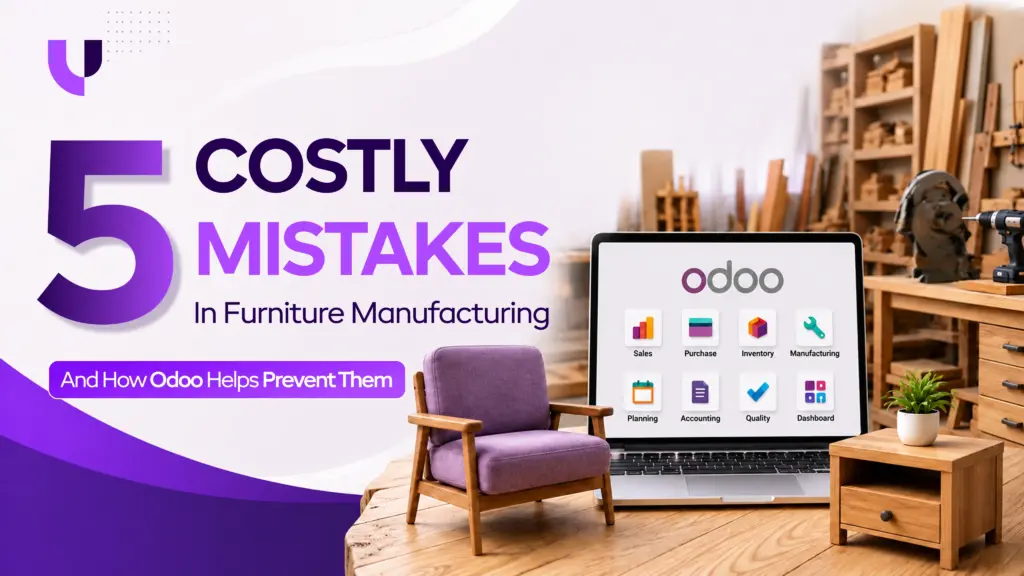
5 Mistakes Furniture Manufacturers Keep Making and How Odoo Fixes Each One
Large-scale operations look effortless until you zoom in on the details. Small moving parts that don’t communicate well with each other often cause big setbacks later.
Here’s a closer look at the top five furniture mistakes manufacturers keep making and how Odoo fixed them.
Mistake 1: Running Production Without a Live Bill of Materials
The firm receives a production order, but the team is working with an outdated bill of materials. The customer had a different request placed weeks ago, but the production team is busy with the previous list of materials.
Here, the procurement team buys another set of materials while the production team expects something else. These aspects appear surprisingly common in furniture manufacturing, especially when customers frequently request customizations and BOM updates are required regularly.
What goes wrong and what does it cost?
When BOMs are inaccurate, every downstream process is affected.
The wrong materials may be purchased. Production teams may discover missing components halfway through a job. Rework becomes more common, delivery schedules slip, and material waste starts increasing. In some cases, an entire production run may need to be corrected because the shop floor was working from outdated information.
The cost isn't limited to wasted materials. It also includes lost production time, delayed deliveries, and reduced customer confidence.
How does Odoo fix it?
Odoo Manufacturing maintains versioned bills of materials that are updatable, traceable, and directly linked to production orders. Teams always know which version of a BOM is live, so there's no chance of working from out-of-date specs.
Flow down changes made during the design, engineering, or customer approval stages to production planning and procurement, helping to ensure that everyone is working from the same information.
How UncannyCS helps
Before implementing the ERP, UncannyCS reviews the client's existing BOM structure, product configurations, and customization workflows. This helps identify inconsistencies early, so historical BOM errors are not carried into the new system.
Mistake 2: Inventory That Lives in Someone's Head or a Spreadsheet
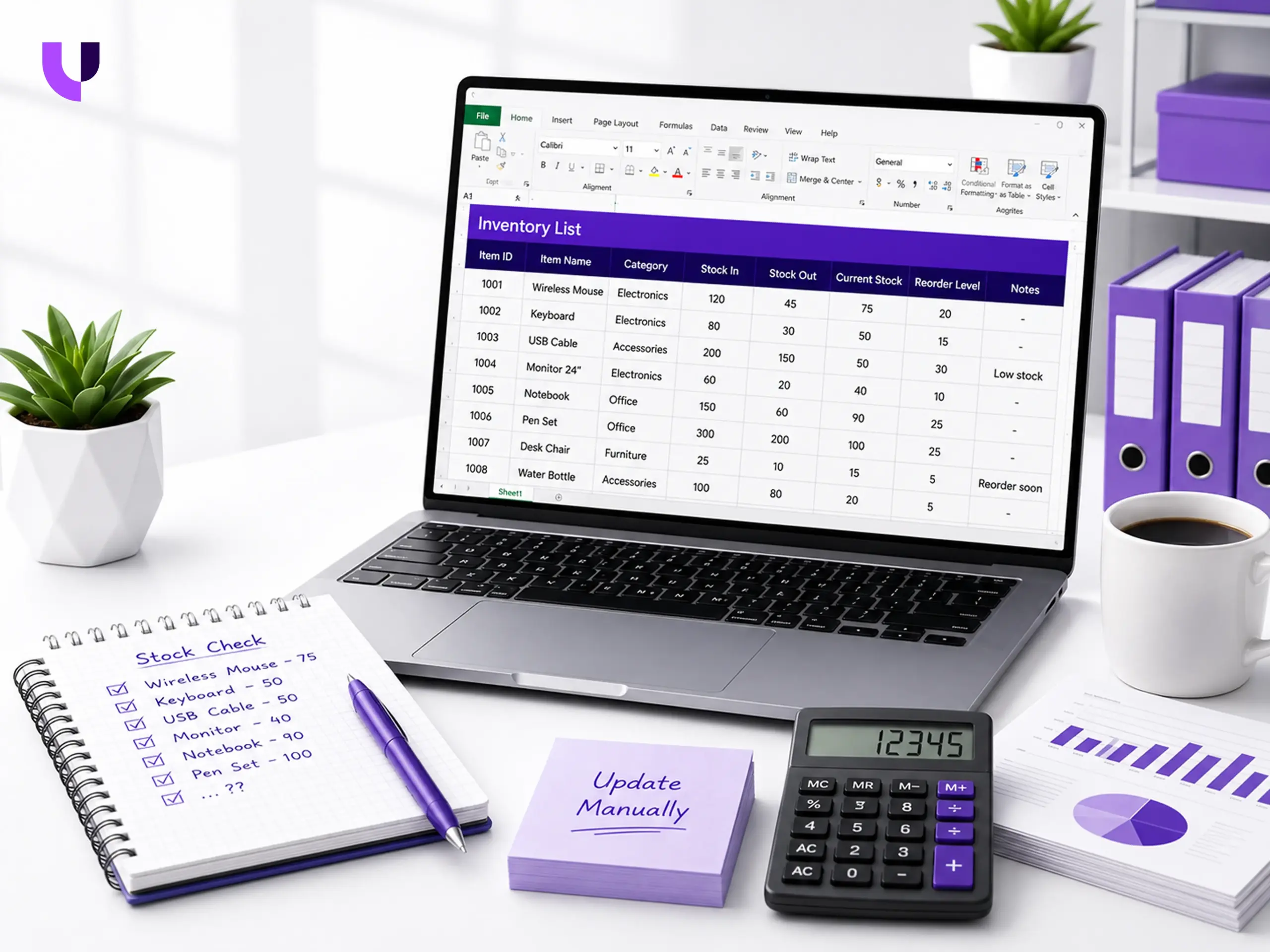 Ask three people how much stock is available, and you may get three different answers.
The spreadsheet says the material is available. The warehouse team can't find it. Procurement places an order just to be safe, only to discover the inventory existed all along. Meanwhile, another critical component runs out unexpectedly because stock levels were never updated.
As order volumes grow, these small inventory gaps become increasingly difficult to manage.
What goes wrong and what does it cost?
Poor inventory visibility creates problems at both ends of the spectrum.
Some manufacturers tie up working capital by purchasing more stock than they need. Others experience stockouts that slow down production and ultimately customer deliveries. Inventory discrepancies also make planning harder because production schedules are built on potentially inaccurate information.
Over time, excess inventory, emergency purchases, and missed production opportunities begin affecting profitability.
How does Odoo fix it?
Odoo’s inventory management module allows business owners to stay updated on their product movement in real time. The modules give updates on incoming stock, material movements, purchases, and production consumption.
These figures are updated with every transaction, reducing dependency on any spreadsheet or manual input. It further enables furniture manufacturers to streamline everything from procurement to planning.
How UncannyCS helps
Team UncannyCS helps manufacturers like you develop inventory architecture as per their unique needs. We develop structures based on the product variations, size, finish, color, and customizations. It allows manufacturers to accurately align inventory data across a growing product line.
Mistake 3: Production Scheduling Done Manually, Optimized for Nobody
As a manufacturer, you schedule everything in advance. During the planning, Monday's production plan looks perfect. However, by Tuesday afternoon, it had already changed three times.
Besides, there are other instances going around on the shop floor:
- A machine is tied up longer than expected.
- A customer requests an urgent order.
- Materials for another job arrive late.
All of this occurs while the supervisors shuffle jobs around to keep production moving, and the shop floor operators wait for the new direction.
The schedule on paper looks very different from the schedule that was actually executed by the end of the week.
What goes wrong and what does it cost?
Small scheduling changes rarely stay small.
Moving one urgent order forward often pushes several others back. One work center ends up overloaded while another sits idle. Teams spend time waiting, jobs begin queuing up, and delivery commitments become harder to meet.
None of these issues adds friction to the workflow at the beginning. However, together, they can lead to production delays, missed deadlines, and additional costs due to slow operations.
How does Odoo fix it?
Odoo closes the loop between planning, scheduling, and production. The production module provides teams with real-time updates on their workloads, production capacity, and job priorities.
This way, teams no longer have to rely on spreadsheets or manual updates to lead the production. The manufacturing team can now analyze data to make informed decisions before any operational delays threaten the workflow.
How UncannyCS helps
Before implementing anything, our team at UncannyCS works with manufacturers to map current production workflows, work centers, routing sequences, and scheduling constraints.
That means Odoo can mirror how the factory actually runs, allowing planners to move away from spreadsheet-driven scheduling without affecting daily production.
Mistake 4: Purchase Orders Raised on Gut Feel, Not Demand Data

A production supervisor walks into procurement and asks if more oak boards can be ordered. Nobody wants to place the order twice, so the checking begins.
- The warehouse believes there is enough stock left for the next few jobs.
- Procurement isn't completely convinced.
- Someone opens a spreadsheet.
- Someone else checks a rack on the shop floor.
- A supplier gets a call just in case.
By the time everyone agrees on the answer, half the morning is gone.
What goes wrong and what does it cost?
Most purchasing mistakes don't start with a bad decision; they start with uncertainty.
Materials get ordered because nobody is sure whether inventory records are accurate. Other materials don't get ordered because everyone assumes there is still enough stock available. Sometimes both situations happen in the same week.
The end result? What many manufacturers generally experience:
- Excess inventory, which occupies space in the warehouse
- Rushed purchases at premium prices
- Production teams waiting for materials that should have been available days ago.
How does Odoo fix it?
Odoo connects purchase decisions to inventory levels, production plans, and material requirements. Instead of relying on manual stock checks or assumptions, procurement teams can see what is needed, when it is needed, and how current inventory levels compare with future demand.
This results in a more demand-driven buying process and less guesswork in procurement planning.
How UncannyCS helps
During implementation, UncannyCS configures supplier lead times, reorder rules, safety stock levels, and procurement workflows based on the manufacturer's actual production environment. This helps ensure purchasing decisions are supported by operational data from day one.
Mistake 5: Finance and Operations Running as Separate Universes
A customer asks for a quote on a custom furniture project, and here’s what happens:
- The sales team prepares a price.
- Production estimates labor requirements.
- Procurement reviews material costs.
- Finance checks historical numbers.
A few weeks later, the job is completed, but nobody can say with confidence whether it was actually profitable.
The information exists; it's just spread across different departments, reports, and spreadsheets.
What goes wrong and what does it cost?
When finance and operations operate separately, decisions are often made using incomplete information.
Material costs change. Labor hours increase. Production delays add unexpected expenses. Yet many manufacturers only discover the true impact after reviewing financial reports weeks or months later.
This makes job costing difficult and pricing decisions increasingly risky. A product that appears profitable on paper may generate far lower margins than expected once all production costs are accounted for.
How does Odoo fix it?
Odoo brings manufacturing, inventory, purchasing, and sales into a single platform. It provides users with a single dashboard to track metrics such as material usage, labor costs, and inventory movement.
This gives manufacturers a clearer view of production costs, profitability, and business performance without waiting for information to be manually consolidated.
How UncannyCS helps
UncannyCS works with manufacturers to align operational workflows with financial reporting requirements during implementation. This way, teams no longer have to track inventory values and cost tracking in different places.
This way, manufacturing units get access to more accurate job costing, pricing decisions, and improved financial visibility.
Want to start a project with us?
Empowering businesses to achieve greatness through strategic guidance and innovative solutions.
Book A Demo
Found this post helpful? Be sure to share it with your network!


About Author
Sanjay Gohel is the Head of Department – Odoo at UNCANNY Consulting Services, specializing in ERP implementation, Odoo development, and software solutions. He helps businesses improve efficiency through customized ERP systems designed to streamline workflows and support operational excellence.


Sanjay Gohel is the Head of Department – Odoo at UNCANNY Consulting Services, specializing in ERP implementation, Odoo development, and software solutions. He helps businesses improve efficiency through customized ERP systems designed to streamline workflows and support operational excellence.