10 Mistakes Clothing Brands Make While Scaling and How Odoo Helps Avoid Them
Read by: 3

Ankit Gauri
CEO
Ankit Gauri is the Chief Executive Officer of UNCANNY Consulting Services, specializing in Odoo, ERP strategy, and digital transformation. With extensive experience helping businesses streamline operations and accelerate growth, he focuses on delivering scalable technology solutions that align business processes with long-term organizational goals.

 12 Min Read
Published on June 4th 2026
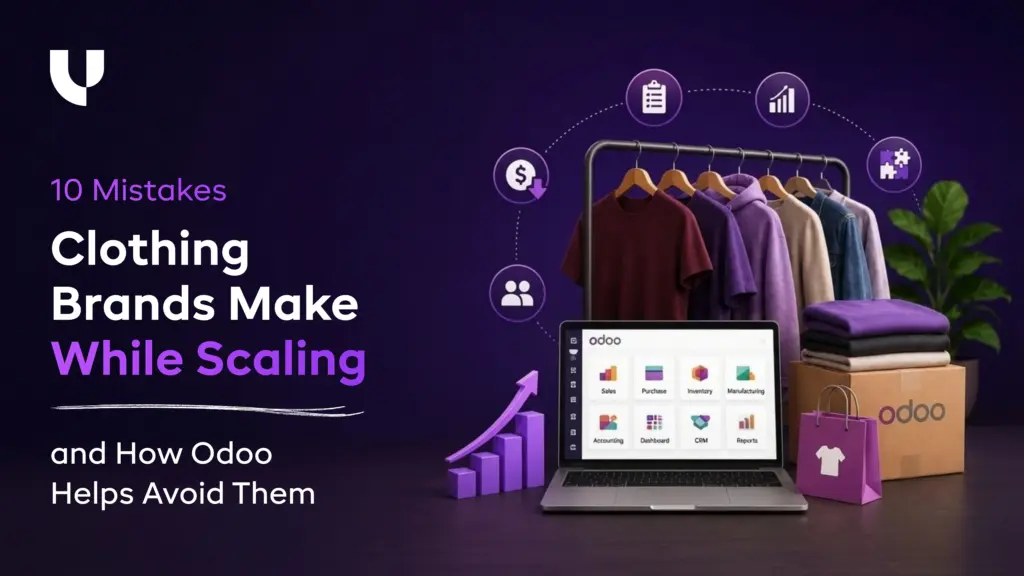
10 Costly Scaling Mistakes Clothing Brands Make And How Odoo Helps Avoid Them
Growth problems in clothing brands rarely appear overnight. They usually build gradually: a few manual processes here, delayed visibility there, and workflows that worked earlier but begin breaking as order volumes increase.
The challenge is that many of these issues initially appear harmless because sales numbers continue to move upward.
1. “We’re selling more, so things must be working.” (Ignoring profitability reality)

Higher sales numbers don’t always indicate a successful business; sometimes, it’s the other way around. Many clothing brands witness growing revenues while, in reality, profits start to shrink behind the scenes.
This usually happens when costs become harder to track across operations:
- Discount-heavy campaigns reduce margins
- return volumes increase fulfillment costs
- Logistics expenses increase with scale
- customer acquisition costs start rising
Revenue numbers often obscure these issues because they reflect sales activity rather than actual profitability.
How Odoo helps:
Odoo gives you a picture of how profitable your products are, in real time. You can see where the money is coming from and where the costs are eating into your profits. Odoo helps brands track revenue from products and sales channels and shows where operational costs affect the bottom line.
2. “Inventory is under control… we think.” (Lack of real-time stock visibility)
Inventory problems often start with assumptions. A product shows available inventory in one warehouse, while another location is already running out.
One team believes stock levels are sufficient, while another places urgent replenishment requests.
Without real-time visibility, businesses commonly face:
- Overstocking in some locations
- Stock shortages elsewhere
- Delayed replenishment decisions
- Inaccurate inventory reporting
Manual updates make these problems harder to spot because inventory movement changes continuously.
How Odoo helps:
Odoo gives you centralized visibility of inventory across stores, warehouses, and channels. Stock updates happen in real time so teams can work with current inventory data, not delayed records.
3. “We’ll fix operations later.” (Scaling without processes)

Processes that work for smaller teams often become difficult to manage once operations expand. Early-stage startups or small-scale organizations generally rely heavily on manual approaches, in which teams handle tasks and resolve issues through quick communication.
Growth adds more moving parts, and these workarounds slowly become bottlenecks.
Common signs include:
- Repeated manual coordination
- Approval delays
- Inconsistent workflows
- Operational dependency on specific team members
Growth starts with people rather than systems.
How Odoo helps:
Odoo helps create structured workflows across procurement, inventory movement, sales operations, and approvals. Automation reduces repetitive tasks and creates more consistency across teams.
4. “More SKUs = More Growth” (Uncontrolled product expansion)
Adding more products often feels like a direct path to growth: more styles, more colors, more variations. But product expansion without visibility can create a different problem.
Over time, businesses may begin seeing:
- Duplicate product variants
- Slow-moving inventory
- Increasing storage costs
- Stock sitting without demand
The issue is usually not adding products. It is adding products without understanding performance.
How Odoo helps:
Odoo provides SKU-level performance visibility, so businesses can identify products that are moving, slowing, or consuming unnecessary working capital.
5. “All channels are performing well.” (No channel-wise clarity)
Growth across multiple channels can sometimes create a false sense of performance. Orders are coming in from marketplaces, D2C websites, retail stores, and other channels, so everything appears healthy at a high level.
The problem usually starts when all the numbers get grouped together. Without channel-level visibility, businesses often struggle to understand:
- Which channels generate stronger margins
- Where customer acquisition costs are increasing
- Which channels drive repeat purchases
- Where operational costs are reducing profitability
Two channels can generate similar revenue but deliver very different business outcomes.
How Odoo helps:
Odoo provides channel-wise reporting and analytics, allowing brands to track sales, profitability, and operational performance separately rather than evaluating everything as a single combined number.
6. “Returns are just part of the business.” (Ignoring reverse logistics impact)
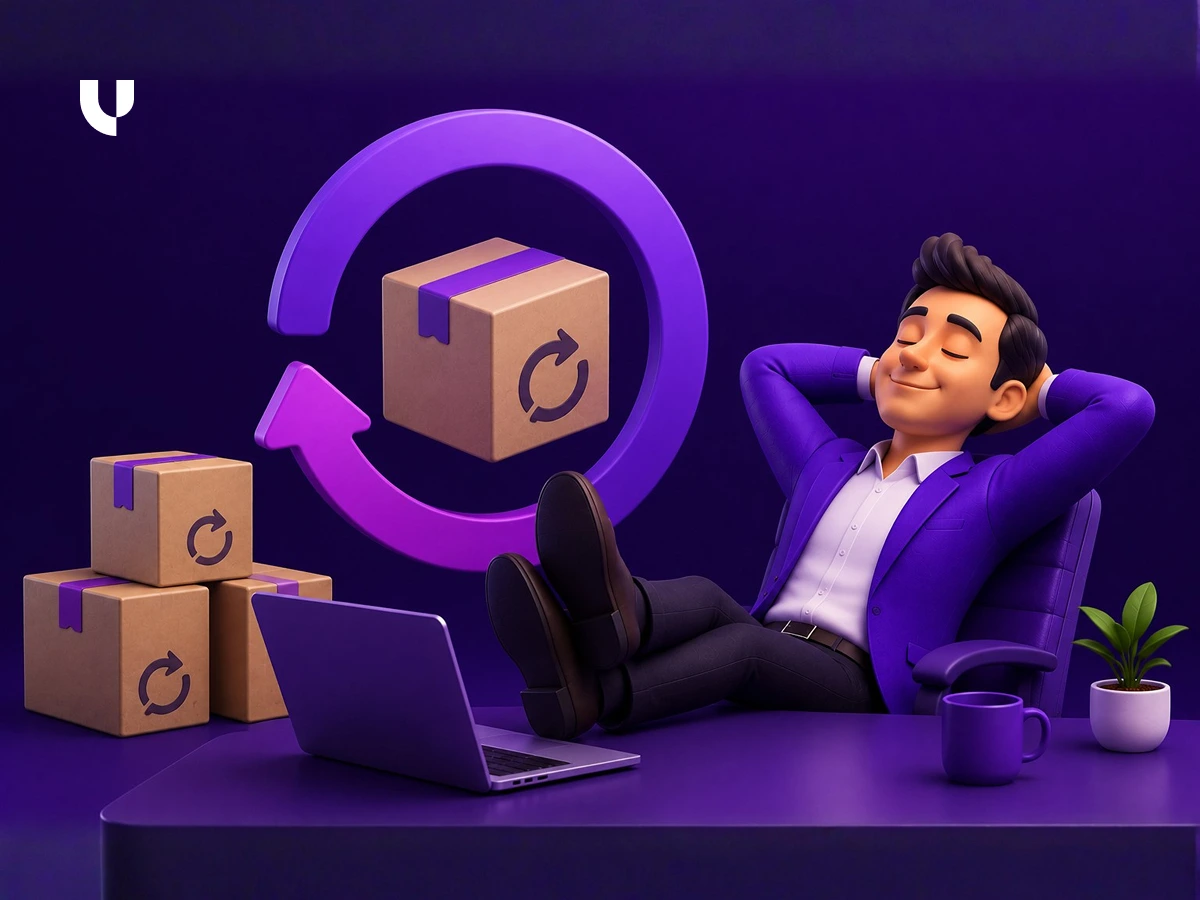
Returns are common in fashion retail, especially with size variations, fit preferences, and customer expectations. The problem arises when returns are treated as routine activity rather than as operational data.
High return volumes often create hidden pressure through:
- Additional logistics costs
- Inventory movement delays
- Refund processing overhead
- Margin erosion over time
Without proper tracking, businesses only see returned products reentering inventory without understanding why returns keep happening.
How Odoo helps:
Odoo integrates returns and refund workflows within a single operational system. Brands can track return trends, product-level patterns, and operational impact instead of treating returns as isolated transactions.
7. “Our tools are working fine.” (Over-reliance on disconnected systems)
Many clothing brands start with tools added one after another as operations grow. The setup often looks familiar:
- Shopify for sales
- Spreadsheets for reporting
- Separate accounting software
- Warehouse systems running independently
Initially, it works. Over time, the gaps start showing up. Inventory numbers stop matching across systems. Teams begin manually updating records.
Reporting takes longer because information is spread across different places. The challenge is usually not the tools themselves. It is the lack of connection between them.
How Odoo helps:
Odoo brings inventory, accounting, procurement, warehousing, and sales operations into a single environment, reducing manual data transfer between systems.
8. “We know our customers.” (Lack of centralized customer data)
Customer understanding often becomes fragmented as businesses expand into multiple channels. Purchase history may exist in one place, support interactions in another, and marketing information in yet another system entirely.
This creates gaps around:
- Customer buying patterns
- Repeat purchase behavior
- Retention opportunities
- Upsell possibilities
Brands may continue acquiring new customers while missing opportunities from existing ones.
How Odoo helps:
Odoo combines CRM functionality with customer purchase behavior tracking, helping brands build a more complete view of customer activity across different channels and interactions.
9. “Hiring more people will solve it.” (Scaling team instead of systems)
Many clothing brands respond to operational pressure by first expanding their teams. More inventory coordinators get added. More people are starting to handle approvals, stock movement, reporting, or order management manually.
Initially, this feels like growth. But over time, the business often becomes more dependent on people remembering processes than on systems that manage them consistently.
That usually leads to:
- Repeated manual coordination
- Slower execution across teams
- Rising operational costs
- Inconsistent workflows between departments
As order volume increases, operational complexity grows faster than the team can comfortably manage.
How Odoo helps:
Odoo automates operational workflows for inventory, procurement, approvals, reporting, and order processing to reduce manual dependency. Rather than just bringing in people to fill operational gaps, companies can create more structured systems that scale more predictably.
10. “We’ll deal with reporting later.” (No real-time decision-making)
Reporting often gets pushed aside while businesses focus on sales growth and fulfillment. The issue is that operational decisions still continue happening every day, whether reporting systems are ready or not.
Many growing brands eventually find themselves working with:
- Outdated spreadsheets
- Delayed sales reports
- Disconnected inventory data
- Manually prepared operational summaries
By the time reports are reviewed, inventory positions, sales movement, or customer demand may already have changed.
The delay usually affects:
- Replenishment planning
- Inventory decisions
- Purchasing timelines
- Response to sales trends
How Odoo helps:
Odoo provides live dashboards and centralized reporting for inventory, sales, procurement, finance, and warehouse operations. Operational data can be used by teams immediately, rather than waiting for manual reports to be generated separately.
Want to start a project with us?
Empowering businesses to achieve greatness through strategic guidance and innovative solutions.
Book A Demo
Found this post helpful? Be sure to share it with your network!


About Author
Ankit Gauri is the Chief Executive Officer of UNCANNY Consulting Services, specializing in Odoo, ERP strategy, and digital transformation. With extensive experience helping businesses streamline operations and accelerate growth, he focuses on delivering scalable technology solutions that align business processes with long-term organizational goals.


Ankit Gauri is the Chief Executive Officer of UNCANNY Consulting Services, specializing in Odoo, ERP strategy, and digital transformation. With extensive experience helping businesses streamline operations and accelerate growth, he focuses on delivering scalable technology solutions that align business processes with long-term organizational goals.