Why Auto Parts Traders Struggle with Inventory Accuracy (And How Odoo Fixes It)
Read by: 2

Ankit Gauri
CEO
Ankit Gauri is the Chief Executive Officer of UNCANNY Consulting Services, specializing in Odoo, ERP strategy, and digital transformation. With extensive experience helping businesses streamline operations and accelerate growth, he focuses on delivering scalable technology solutions that align business processes with long-term organizational goals.

 18 Min Read
Published on June 1st 2026
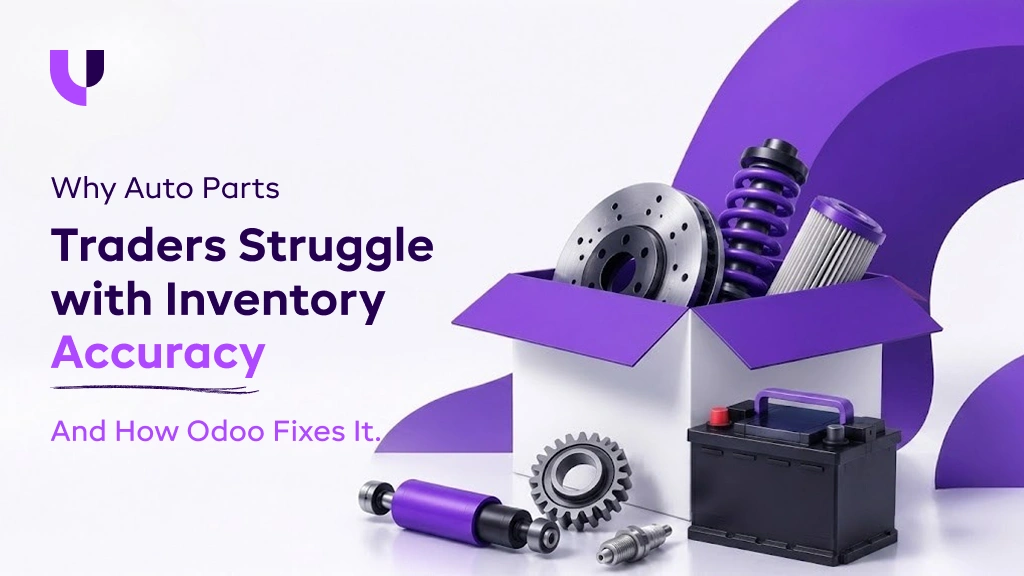
What’s Actually Causing Inventory Errors and How Odoo Fixes Each One
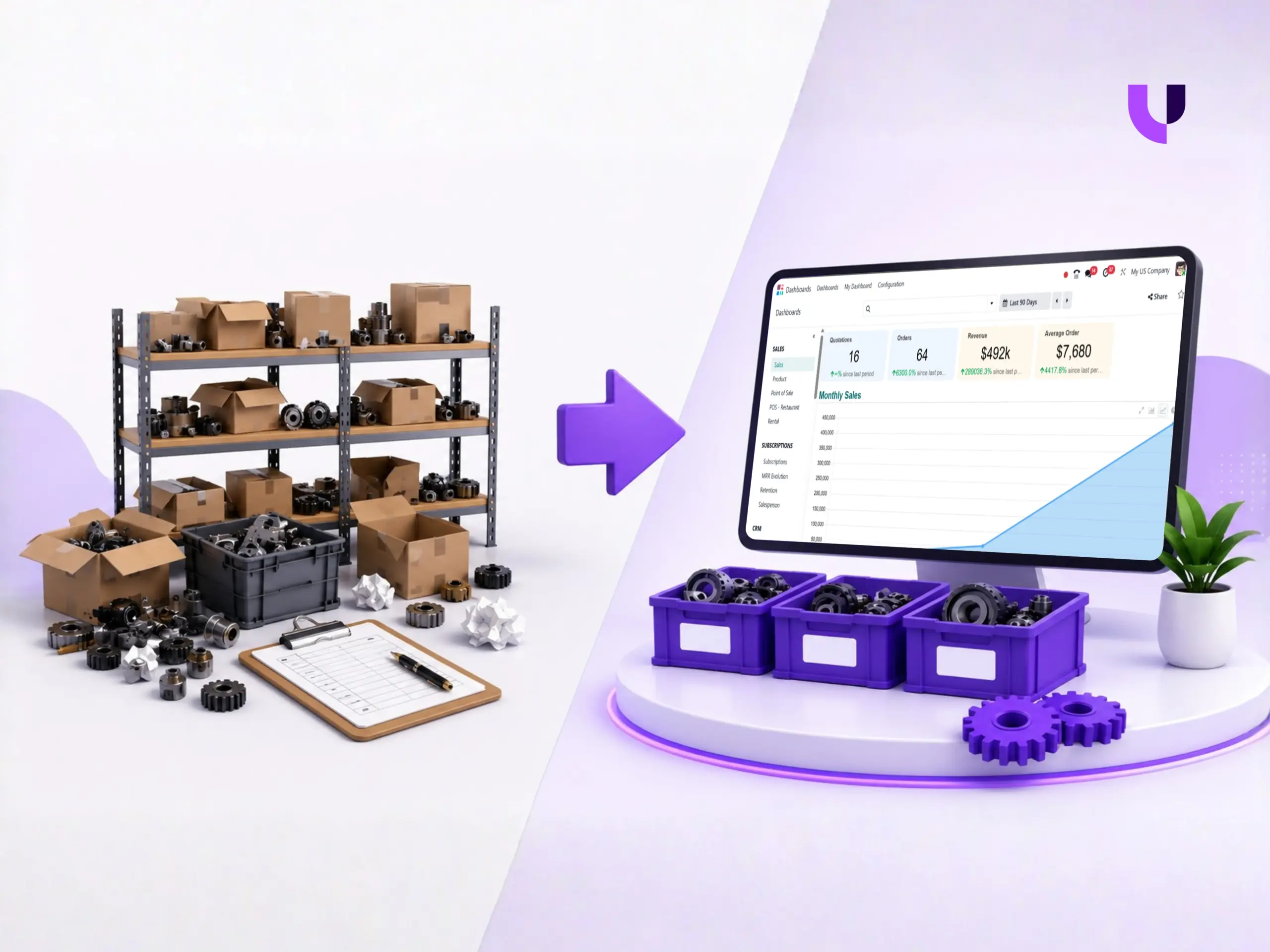
Inventory errors don’t come from a single breakdown. They build when the product structure, warehouse execution, and system data no longer align.
Let’s get a closer look at the common causes of inventory errors and how Odoo fixes them.
#1 Too many similar SKUs and variants
Auto parts differ in small but critical ways (compatibility, size, or model), but many systems rely heavily on naming to manage them. Over time, this creates confusion. Similar parts get grouped incorrectly, or duplicates get created, making identification unreliable during picking.
This is where errors start. The system shows stock, but the distinction between variants isn’t clear enough, leading to the wrong selection.
How Odoo fixes it:
Odoo structures products using attributes and variants, where each variation is defined at the system level, not just in the name.
This means:
- Each variant has a clear identity
- Picking lists reflect exact configurations
- Warehouse teams don’t rely on memory to differentiate parts
During picking, the system guides the selection based on these attributes, reducing ambiguity at execution.
Uncanny’s Observation
Most teams don’t struggle with the number of SKUs. They struggle with how those SKUs are structured. That’s where confusion starts.
In one implementation involving a high-volume industrial equipment supplier from the USA (Pittsburgh Spray Equipment Ltd.), variant-related picking errors were frequent due to similar product names.
After restructuring products using variants, these errors dropped by 45% within the first few weeks, as identification became system-driven rather than manual.
#2 No real-time visibility across locations
Inventory is spread across warehouses, racks, and bins. When updates are delayed or inconsistent, stock data becomes unreliable.
A common situation: stock exists in the system but cannot be physically located during picking.
How Odoo fixes it:
Odoo provides centralized, real-time inventory visibility across all locations. Every movement (receipt, transfer, or dispatch) updates stock instantly within the same system.
All teams operate on the same live data.
Uncanny’s Observation
Most inventory issues are not about shortage. They come from not knowing where the stock actually is.
When visibility is centralized, the gap between system data and actual stock reduces quickly. Teams spend less time searching for parts and more time executing orders.
For instance, a UAE-based electronic component manufacturer was struggling with inventory management due to scattered logistics data. Odoo helped the team streamline shipping and increase sales by over 80%.
#3 Manual errors in warehouse operations
Picking, packing, and stock updates often depend on human checks. In fast-moving environments, even small mistakes like wrong part, wrong quantity, missed update, accumulate into larger accuracy issues.
How Odoo fixes it:
Odoo enables barcode-based workflows across receiving, picking, and transfers.
br
Each scan validates:
- The correct product
- The correct location
- The correct quantity
The system prevents incorrect execution by enforcing validation at every step.
Uncanny’s Observation
Accuracy doesn’t fail because teams are careless. It fails because the system expects people to remember too much.
With Odoo, warehouse execution shifts from memory-driven to system-validated. Teams that rely on visual checks begin to see a clear reduction in dispatch errors once barcode workflows are enforced consistently.
#4 Disconnected systems across teams
Sales, procurement, and warehouse teams often operate on separate systems or workflows.
This creates gaps:
- Sales do not reflect the real stock
- Procurement orders without full visibility
- The warehouse executes on outdated data
Each team works with its own inventory, leading to mismatches in planning and execution.
How Odoo fixes it:
Odoo connects all operations into a single system. Sales, inventory, and procurement share the same data in real time. Every transaction updates the same source of truth.
Uncanny’s Observation
With Odoo, teams stop working on multiple inventory versions, reducing back-and-forth. Teams and avoids repeated corrections in orders and stock levels.
For instance, Uncanny’s latest collaboration with a Dubai-based B2B distributor (IGGT Global) was experiencing incorrect COGS value due to scattered information. Enter Odoo, and the business experienced a 90% faster turnaround with centralized, accurate data.
#5 Stock exists but isn’t traceable within warehouses
Inventory may be available in the system, but locating it physically becomes difficult without proper bin-level tracking. This leads to delays during picking and confusion during audits.
How Odoo fixes it:
Odoo supports bin and location-level tracking. Each product is assigned to a defined location, and movements are recorded as part of the workflow. Picking routes are generated based on actual storage locations.
Uncanny’s Observation
Stock “in the system” and stock “on the shelf” are often two different things. With Odoo, warehouse teams know exactly where to pick from.
Thanks to Odoo, one of Uncanny’s UK-based clients in the F&B industry (NAH Foods) was able to streamline inefficient procurement planning and achieve 80% forecast accuracy.
#6 Inconsistent SKU naming and product data
As catalogs grow, product data becomes inconsistent: duplicate entries, unclear naming, and a lack of standardization. This makes tracking and reporting unreliable.
How Odoo fixes it:
Odoo enforces structured product data and standardization, reducing duplication Pinterest
and improving consistency across the catalog. Instead of free-form entries, products follow a consistent structure across the system.
Uncanny’s Observation
Most data problems are not technical; they come from a lack of structure at the start.
Odoo implementation reduces duplicate records by clarifying product identification across teams. Over time, this improves both inventory accuracy and reporting reliability.
#7 Delayed stock updates and adjustments
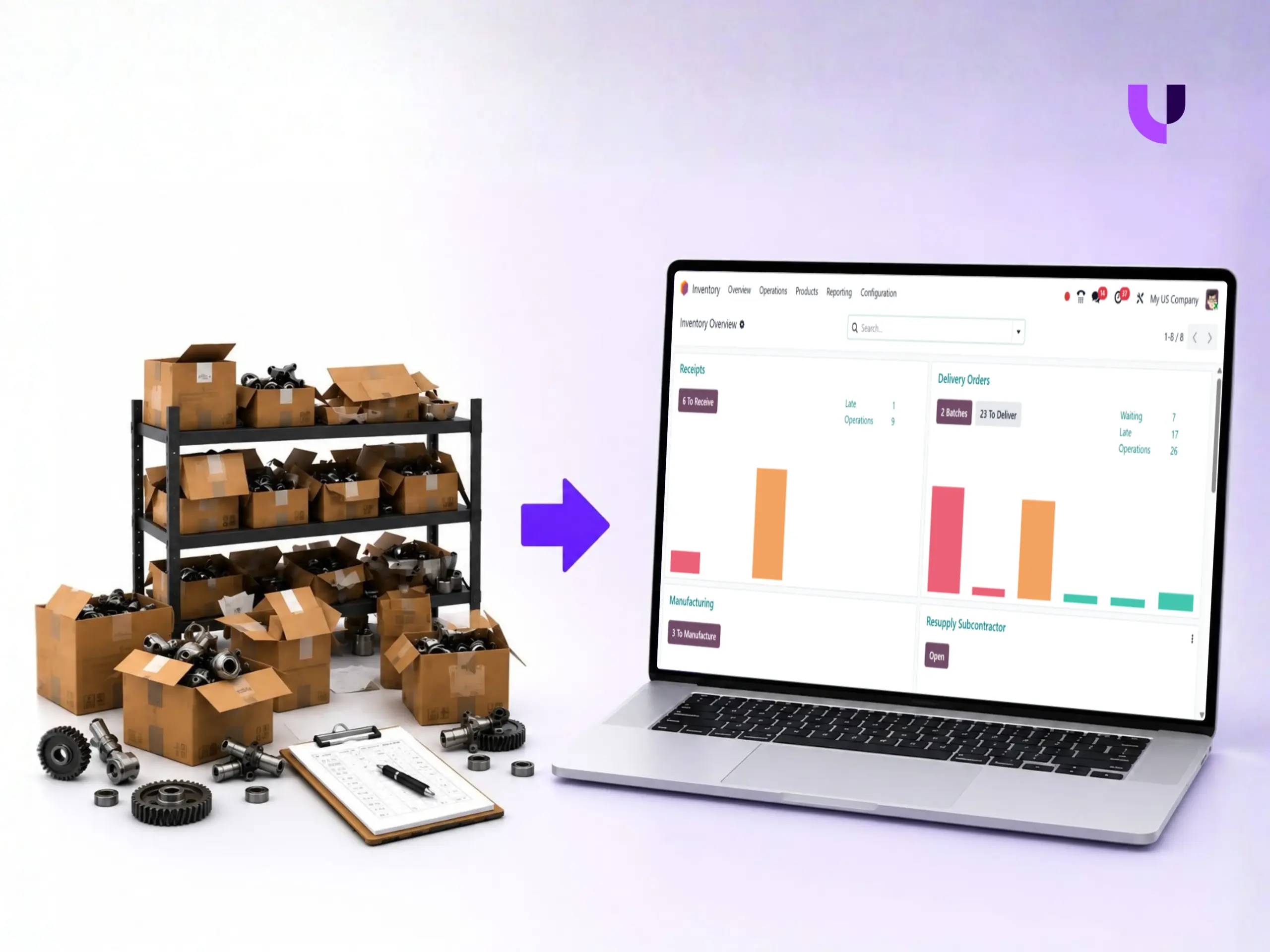
When stock movements are not recorded immediately, system data falls out of sync with actual inventory. This leads to over-selling, stock mismatches, and unreliable reporting.
How Odoo fixes it:
Odoo updates stock in real time with every transaction. There is no separate update step; movements are recorded as part of the workflow itself.
Uncanny Observation
Most inventory mismatches don’t happen instantly. They build because updates lag behind reality. With Odoo, inventory data reflects reality at any given moment, giving teams confidence in stock levels and reducing errors caused by outdated information.
One of Uncanny’s recent implementation operations helped a Swiss Eyewear brand (Nirvana) improve operational visibility by 90% with real-time tracking with Odoo.
#8 Returns and reverse logistics are not tracked properly
Returned items often create confusion when they are not processed consistently or handled outside the main inventory flow. They may not be checked, categorized, or updated correctly, which creates confusion in available stock.
How Odoo fixes it:
Odoo tracks returns within the same system, linking them to original orders and validating them before adding them back to inventory.
Uncanny’s Observation
Returns are rarely accounted for in inventory planning, yet they quietly distort stock accuracy.
With Odoo implementation, returned stock becomes traceable and properly accounted for. This prevents duplicate counting and improves clarity on available inventory.
#9 Lack of audit trails for inventory movements
When discrepancies arise, teams cannot trace the issue back to its source. Without clear records, resolving errors becomes time-consuming and unreliable. This makes issues harder to resolve and more likely to repeat.
How Odoo fixes it:
Odoo maintains complete logs of all stock movements, including who performed the action, when, and where.
Uncanny’s Observation
If you can’t trace the error, you can’t fix the process that caused it. Odoo flips the script, allowing teams to trace discrepancies back to their sources rather than guessing. This helps prevent recurring issues and improves accountability across operations.
#10 No integration with procurement planning
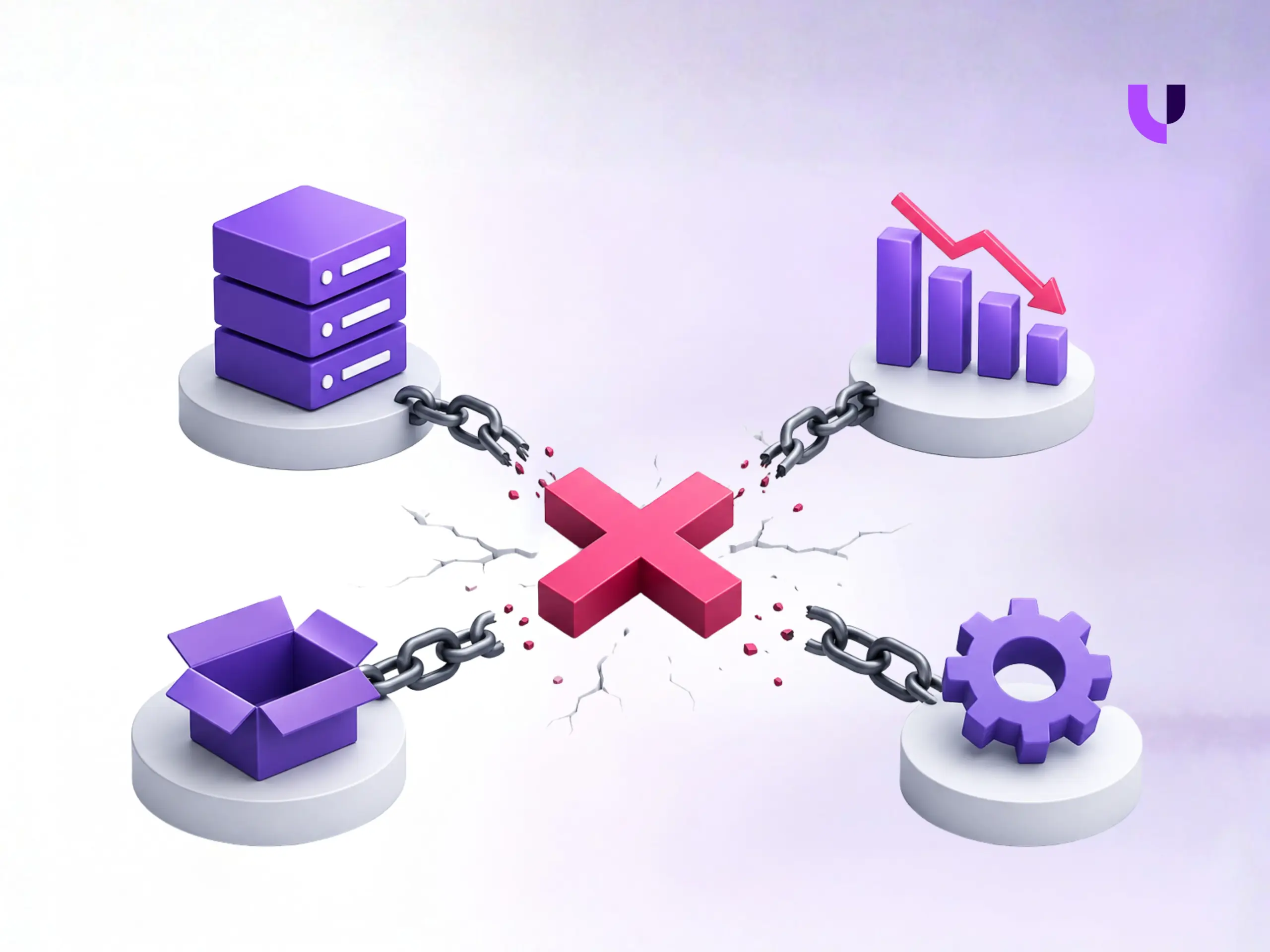
Procurement decisions are made separately from actual inventory movement. Orders are placed based on assumptions, not current demand. This leads to overstocking or stockouts.
How Odoo fixes it:
Odoo links procurement directly with inventory and demand. Purchase orders are triggered based on stock levels, sales data, and predefined rules.
Uncanny’s Observation
Most ov erstocking problems don’t start in the warehouse; they start in procurement. With Odoo, ordering becomes demand-driven rather than assumption-based.
Inventory levels stay more balanced, reducing excess stock and missed sales.
We observed something similar with one of our recent collaborations. A US-based medical equipment and supplies dealer noticed improved traceability (by 98%) following Odoo implementation.
What does it present?
Inventory accuracy problems are not random. They are predictable patterns that recur when systems are not properly structured.Fixing them is not about tighter control. It is about removing the gaps that allow these errors to happen in the first place. Want to learn more about how Odoo inventory management streamlines operations? This blog explores Odoo's role in seamless inventory management.
Why Barcode-Based Inventory Is Critical in Auto Parts Warehousing
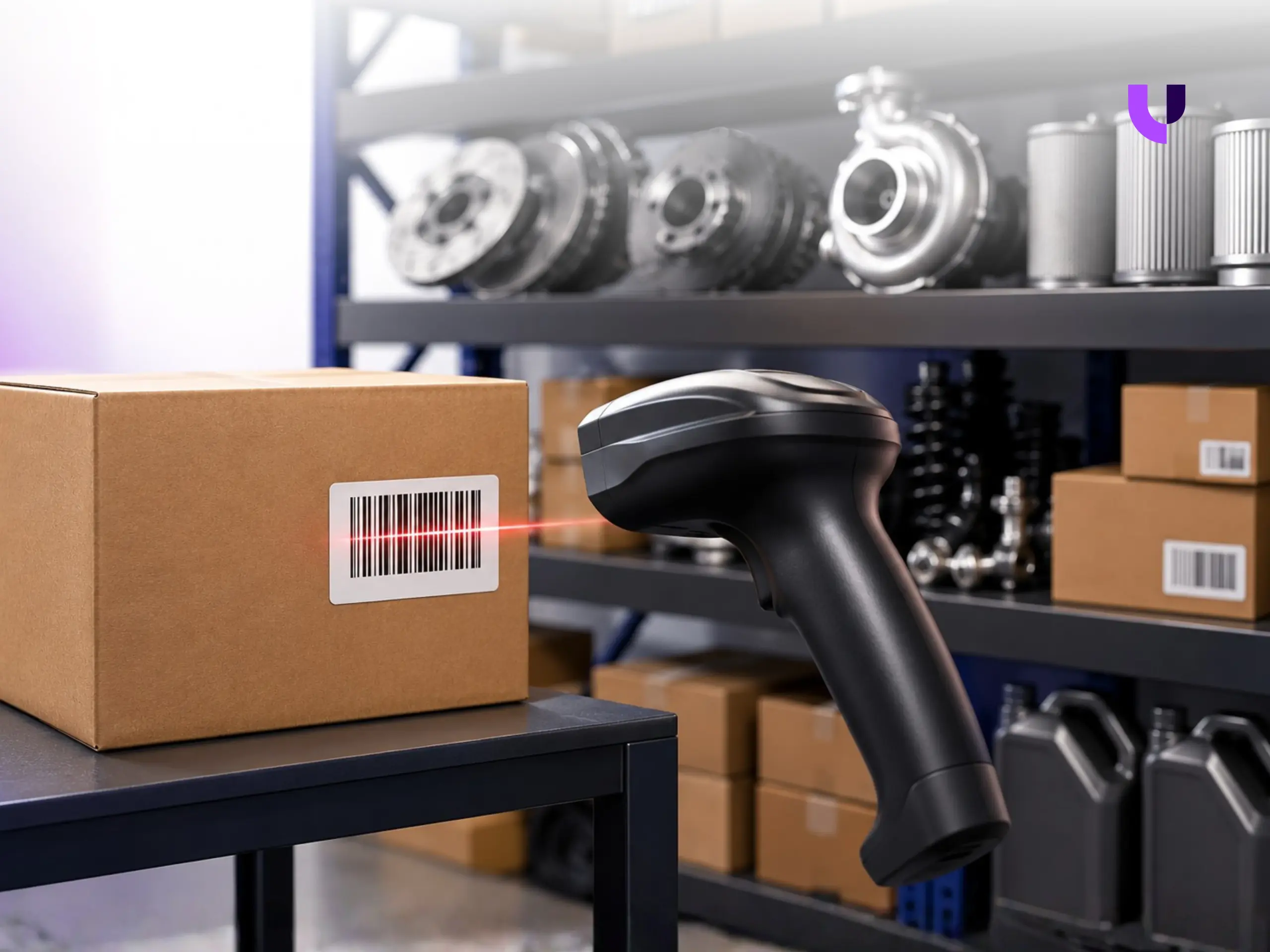
In auto parts warehouses, many products look similar but are not interchangeable. When picking depends on visual checks or memory, errors are not occasional.
They become part of daily operations, namely, where manual picking breaks occur.
Warehouse teams often rely on:
- Part numbers
- Visual similarity
- Familiarity with products
This works until SKU volume increases and variants start overlapping in appearance.
At that point, even experienced teams begin to make mistakes, especially under time pressure. This is where wrong dispatches start repeating.
What changes with barcode validation?
Barcode scanning introduces validation at the point of execution.Each action is checked:
- Correct product
- Correct bin
- Correct quantity
If something doesn’t match, the system prevents the process from moving forward. This removes the need for manual double-checking and reduces dependency on memory.
How does this impact accuracy?
With barcode workflows in place:- Picking errors drop
- Stock updates happen as part of the process
- Inventory stays aligned with actual movement
This is not a reporting improvement; it is a correction at the execution level.
Odoo integrates barcode workflows directly into receiving, picking, and transfers. This ensures that validation occurs during the process, not after.
Want to start a project with us?
Empowering businesses to achieve greatness through strategic guidance and innovative solutions.
Book A Demo
Found this post helpful? Be sure to share it with your network!


About Author
Ankit Gauri is the Chief Executive Officer of UNCANNY Consulting Services, specializing in Odoo, ERP strategy, and digital transformation. With extensive experience helping businesses streamline operations and accelerate growth, he focuses on delivering scalable technology solutions that align business processes with long-term organizational goals.


Ankit Gauri is the Chief Executive Officer of UNCANNY Consulting Services, specializing in Odoo, ERP strategy, and digital transformation. With extensive experience helping businesses streamline operations and accelerate growth, he focuses on delivering scalable technology solutions that align business processes with long-term organizational goals.